
Living with mast cell activation syndrome (MCAS) affects far more than most people realise, and for me one of the clearest signs that something was wrong was my teeth.
In this article I share my own story and the practical steps I now take, and recommend to clients, to protect dental health with MCAS.
My story
One of my biggest challenges, and something that kept showing me there was a real problem when gastroenterologists, endocrinologists, ENT specialists and more told me there was nothing wrong, was that my dental health was deteriorating rapidly.
I asked my dentist to photograph my fillings and record how fast they were disappearing. That finally gave me something concrete to write to the gastroenterologists about.
I was convinced it must be linked to reflux, as I could not think of another reason teeth would deteriorate so quickly. I also had symptoms in my mouth: an unusual taste, and inflamed, pink papillae on my tongue (transient lingual papillitis), sometimes on the sides of my mouth too.
I had 24-hour pH-impedance testing and gastric emptying tests, which showed no acid or non-acid reflux overnight. Eventually I was diagnosed with Mast Cell Activation Syndrome and many allergies and reactions were happening in my mouth.
Whilst I began deeper work with nervous system support and emotional processing I needed to support my dental health in the meantime. Here’s a few things that helped which I also recommend to clients.
1. Vitamin D and K2
Protect your vitamin D levels by supplementing through the winter, ideally with added K2 in the MK7 form.
Around 2,000 IU of vitamin D a day through the winter, and up to 4,000 IU (the UK safe upper limit for adults) without testing.
K2 is typically included at 25 to 50 micrograms per 1,000 IU of vitamin D. There is no official UK recommended intake for K2, and around 50 to 200 micrograms is a commonly used range.
2. Calcium
Check your calcium intake, especially if you do not eat dairy. The Royal Osteoporosis Society has a free online calcium calculator that makes this easy, and you can supplement with Calcium Citrate if you are falling short.
3. Vitamin C
Vitamin C is important for healthy gums and for collagen synthesis, so it supports the repair of damaged tissue. Eat plenty of fresh fruit and vegetables.
4. Choosing a toothpaste
This can be tricky with MCAS, as many people react to different toothpastes. The ones I use are not perfect, and I still notice some sensations, but I use Dimples, which contains hydroxyapatite and keeps harsher ingredients such as SLS to a minimum. The brand Himalaya also has natural toothpastes that seem to be okay for me. They also have one which is designed to support oral hydration called Himalaya Pro Hydra.
An option I have not tried yet is Dental Direct sell an unflavoured, SLS free toothpaste call Ora Nurse with the mint removed, designed for sensory sensitive children, for example autistic children who are sensitive to taste and texture. It could suit people who react to mint, which I have in the past.
Watch out for citric acid. For many people with MCAS this is a problem, and it is found in lots of dental products and supplements. Always check labels. Preservatives and other acids may also be triggers.
5. Orthodontics, Tooth Mousse and Mouth Guards
My dental structure changed quite rapidly, and my dentist explained that crossing teeth could create opportunities for infection. Invisalign was very expensive, but future dental work would likely have cost even more.
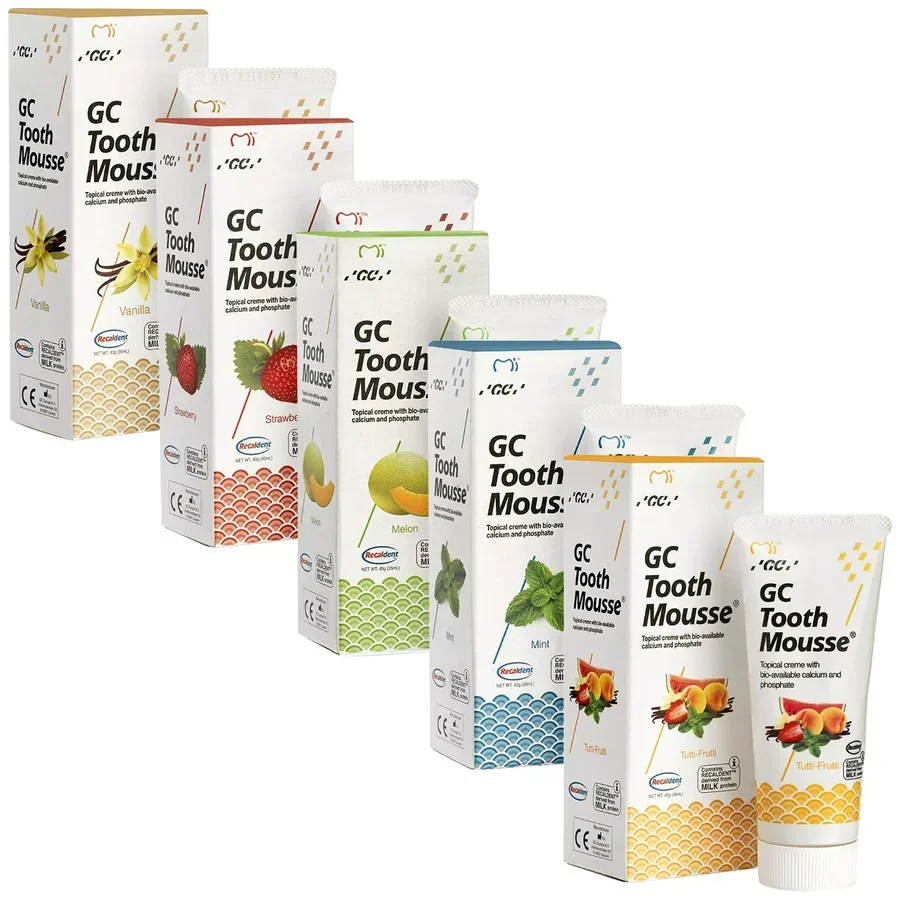
I now use my night aligners with GC Tooth Mousse (available from Dental Direct, in different flavours) for a couple of weeks at a time, to really bathe the teeth. It helps with microfractures, which my dentist explained can come from grinding and clenching. The later is a common sign nervous system work is required as many underlying stressors will contribute to clenching and grinding.
A mouth guard, if you can tolerate one, is worth considering to avoid further dental wear.
6. Mouthwash and rinses
I have not found a mouthwash I can tolerate, as I am very sensitive to all of them. Instead I use a water flosser, and my dentist recommended salt water rinses: half a teaspoon of salt in warm water, swished around the mouth for 30 seconds or more.
7. Managing dry mouth
Antihistamines often cause a dry mouth, which raises the risk of decay. Sip water through the day, try dry mouth gels, and chew sugar-free gum if you tolerate it.
8. Tell your dentist about MCAS
Let your dentist know about your MCAS before any treatment, as local anaesthetics, latex, other dental materials and the stress of the appointment itself can all trigger reactions.
Final thoughts
If your teeth are changing quickly and nobody can explain why, trust that instinct and keep a record. With MCAS, looking after your mouth means thinking about nutrition, the products you use, medication side effects and working with a dentist who understands your sensitivities.
If you would like personalised support with MCAS, nutrition and histamine, you can book a private consultation with me.