
Mast Cell Activation Syndrome (MCAS) Nutritionist
A personalised, integrated approach to MCAS including nutrition, supplements, lifestyle and symptom support
MCAS Nutritionist: Integrated Support for Mast Cell Activation Syndrome

If you're living with Mast Cell Activation Syndrome, you'll know how exhausting it is to navigate a condition that many practitioners don't fully understand, let alone treat.
I'm Keris Marsden, a specialist nutritionist based in the UK and I also have MCAS.
Before I discovered this I was diagnosed with early Peri/Menopause, Irritable Bowel Syndrome, PCOS, Reflux, Chronic Gastritis, Silent Reflux (LPR), Small Intestinal Bacterial Overgrowth (SIBO), sinusitis and more.
I visited multiple medical professionals including Gastroenterologists, Ear Nose and Throat specialists, Endocrinologists and Dieticians.
I tried every alternative route including Herbalists, Functional Medicine Practitioners, Osteopaths, Physiotherapists and Acupuncturists.
I eventually found symptom relief with an integrated approach that combines MCAS medications, nutrition adaptations, supplements and nervous system support.
I support many clients with MCAS within my practice.
MCAS symptoms are real, complex, and deeply intertwined with your gut, immune system, hormones, and nervous system.
My personal belief is that MCAS requires a highly personalised plan that covers all aspects of your health including emotional wellbeing.
What is MCAS
Mast Cell Activation Syndrome is a condition in which mast cells immune cells found throughout your body — activate too easily and too often, releasing chemicals that trigger a wide range of symptoms.
These can include:
Gut issues: bloating, nausea, diarrhoea, abdominal pain
Skin reactions: flushing, hives, itching, rashes
Neurological symptoms: brain fog, headaches, ADD, anxiety, insomnia
Respiratory symptoms: congestion, shortness of breath
Fatigue and post-exertional malaise
Cardiovascular: tachycardia (rapid heart rate), hypotension (low blood pressure), light headedness, syncope (fainting), chest pain and palpitations
Food sensitivities and histamine intolerance
Joint pain and inflammation
MCAS is increasingly recognised as a common thread in Long Covid, CIRS (Chronic Inflammatory Response Syndrome), and perimenopause.
These are conditions that I also specialise in supporting.
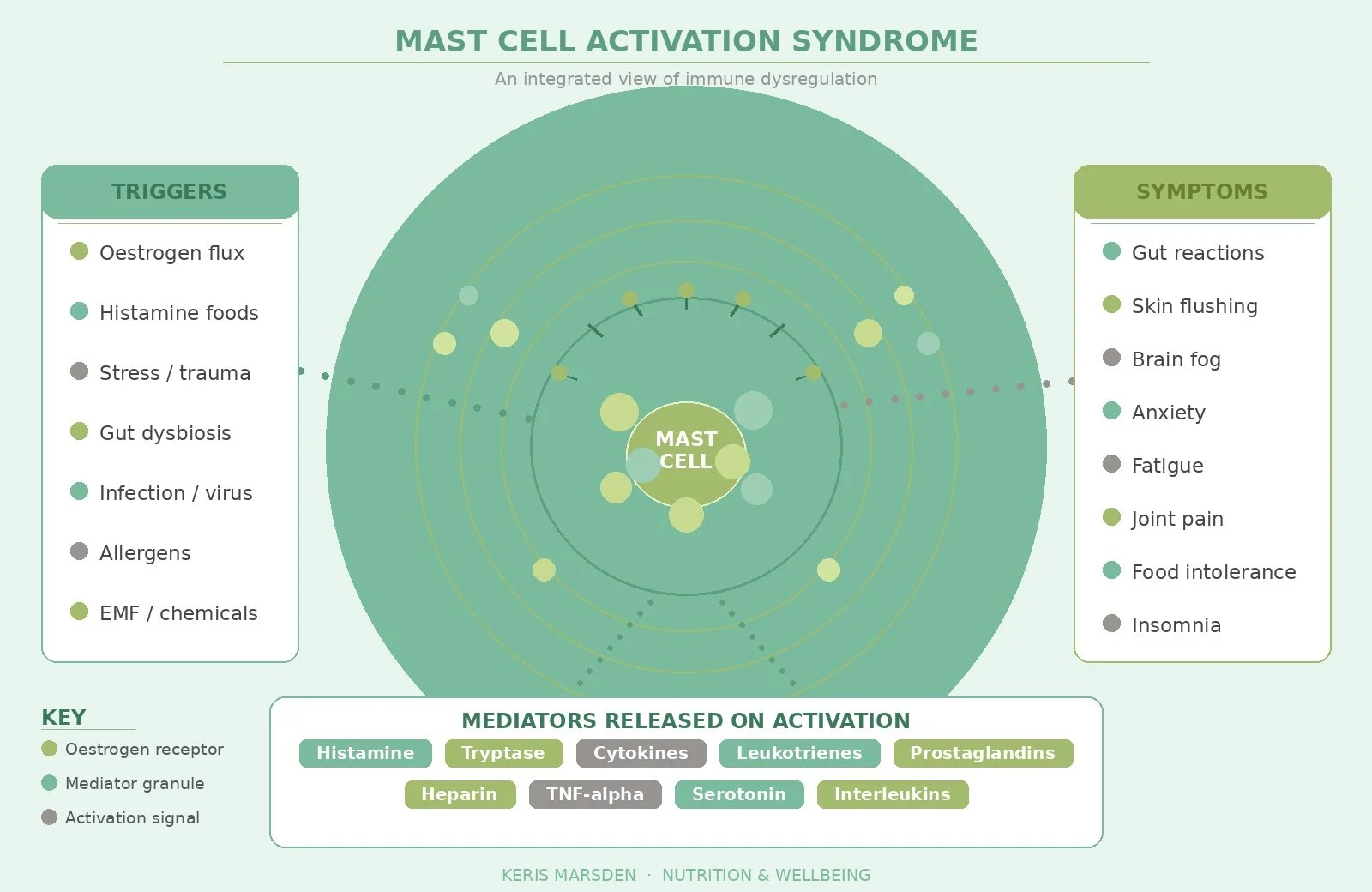
The MCAS and perimenopause and Menopause connection
One area that is rarely discussed, yet profoundly affects many of my clients, is the relationship between MCAS and changing hormones.
Oestrogen directly stimulates mast cells, while progesterone tends to have a calming effect.
As women move through perimenopause and menopause, the fluctuations and eventual decline in these hormones can significantly worsen MCAS symptoms.
If your symptoms have worsened since your mid-thirties or forties, this connection may be important for you.
Often my clients struggle to tolerate HRT, herbs and supplements typically used to alleviate hormone symptoms so I help them navigate through alternative types of support.

How Nutritional Therapy can help MCAS
There is no one-size-fits-all MCAS diet — and anyone who tells you otherwise hasn't worked with enough people living with this condition.
My approach is individualised, evidence-informed, and goes far beyond a low-histamine food list. I address:
Gut health and the integrity of the intestinal lining
Immune system support through targeted nutrition, supplements and nervous system regulation
Histamine metabolism and covering cofactors that support it (including B6, vitamin C, copper and DAO enzyme)
Anti-inflammatory eating addressing your specific triggers
Blood sugar balance, which directly affects mast cell reactivity
Nervous system support; chronic stress and trauma keep mast cells in a state of high alert
Sleep and nocturnal symptom support for flares and recovery

My Approach To MCAS
My approach to MCAS is built on lived experience and clinical practice. I've navigated this condition myself — which means I know what actually moves the needle, and what simply adds to the overwhelm.
Nervous system regulation: mast cells are exquisitely sensitive to stress and threat. Calming the system from the inside out is foundational, not optional. I use somatic experiencing, body scans, grounding tools and guided meditations to help restore a felt sense of internal safety.
Strategic nutrition and supplementation: Rather than layering in expensive supplements to fight every possible trigger, I focus on what your cells genuinely need to function: real nutrient requirements, digestive integrity and absorption. The infrastructure everything else depends on.
Emotional processing and integration: unresolved emotional stress is one of the most underestimated drivers of mast cell reactivity. Through journaling, creative practices, and mind-body approaches, we gently work with what the nervous system has been holding.
Reducing health anxiety and overwhelm: fear-based narratives around elimination diets, mould protocols, and toxin frameworks often make MCAS worse, not better. I help you filter what's genuinely useful, release what isn't, and build a relationship with your health that feels empowering.
Education and agency: understanding why your body is responding the way it is changes everything. When the science makes sense, you move from confusion into agency, and that shift is genuinely therapeutic.
I work with clients through personalised 1:1 consultations and the Mindful Body Method, a cost effective membership community for those navigating chronic health challenges, perimenopause, and emotional wellbeing.

Who I Work With
My MCAS clients are typically people who:
Have a confirmed or suspected MCAS diagnosis and feel overwhelmed by conflicting information online
Often have a prior history of complex health conditions (autoimmune conditions, hypothyroidism, Irritable bowel syndrome, Inflammatory Bowel Syndrome, Reflux (GERD), arthritis, complex menstrual cycle symptoms (PMS and PMDD)
Have tried elimination diets and low histamine diets without lasting improvement
Are also navigating Long Covid, CIRS, or complex gut and immune issues
Suspect their hormones are making their MCAS worst
Want support that addresses everything - symptom anxiety, nervous system support, supplements and medication support

Frequently Asked Questions
-
No. Many of my clients come to me with suspected MCAS or a complex combination of symptoms that hasn't yet been formally diagnosed. I work with your lived experience and current symptoms, and can support you in seeking a formal diagnosis where appropriate.
-
Yes. I work with clients across the UK and internationally via online consultations. All sessions take place via video call, so you can access support from the comfort of your home.
-
AYes. There is significant overlap between MCAS, Long Covid, and CIRS, and I have experience working with clients navigating all three. I take a comprehensive, systems-based approach that addresses the root drivers of chronic immune dysregulation.
-
Absolutely. The intersection of MCAS and hormonal change is an area I'm particularly passionate about. Many of my clients are women in their forties and fifties whose MCAS symptoms have significantly worsened since perimenopause began — and who have struggled to find practitioners who understand both conditions.
-
Yes. I’ve been in clinical practice for almost 15 years helping clients with chronic and complex health conditions.