
Perimenopause and Menopause Nutritionist
A personalised, integrated approach to perimenopause and menopause, including nutrition, supplements, HRT guidance and lifestyle support
Menopause Nutritionist: Integrated Support for Perimenopause and Menopause

If you're in perimenopause or menopause, you may feel as though your body has changed overnight. The things that used to work stop working, your sleep, mood and energy shift, and the advice online is loud, conflicting and often designed to sell you something.
I'm Keris Marsden, a BANT registered nutritional therapist with 18 years of clinical experience, and I've been there myself. At 38 I was told I was in early menopause. I panicked, and spent thousands on private consultants, tests, prescriptions and the latest supplements, only to feel no different.
That experience shaped how I work. I've since supported hundreds of women through perimenopause and menopause with an integrated approach that brings together nutrition, exercise, supplements, nervous system support and clear, evidence-based guidance on HRT, working alongside your GP or menopause specialist.
I work online with women across the UK and internationally.
What is perimenopause?
Perimenopause is the transition before your periods stop for good, when oestrogen and progesterone fluctuate and then decline. It can begin in your late thirties or forties and last for several years.
Common symptoms include:
Hot flushes and night sweats
Sleep disruption and insomnia
Low mood, anxiety and irritability
Brain fog and memory changes
Weight gain, especially around the middle
Fatigue and low energy
Joint and muscle aches
Digestive changes, bloating and new food sensitivities
Changes to your periods, from heavier bleeds to irregular cycles
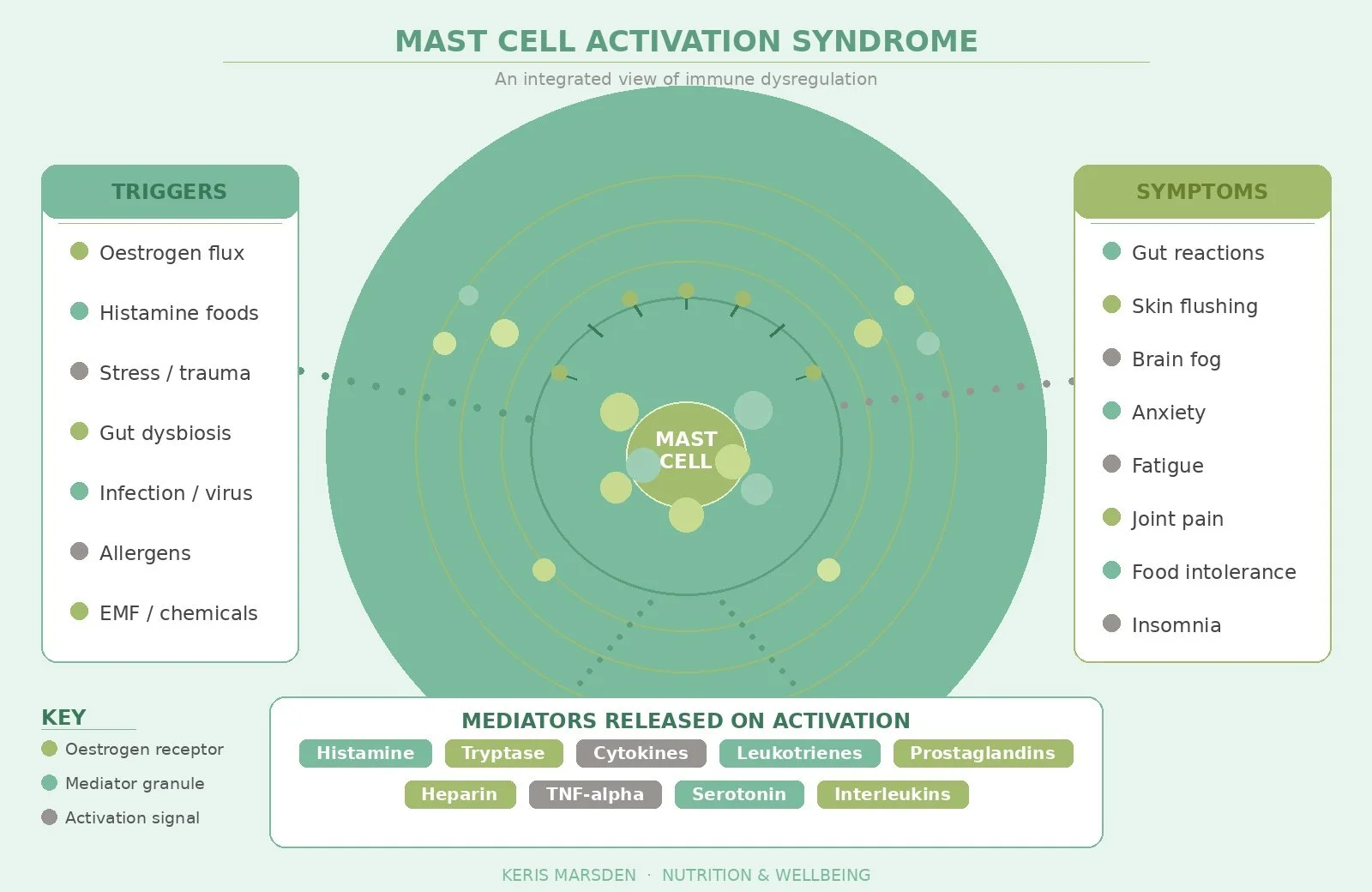
Hormones, stress and your gut: the bigger picture
Not every symptom in midlife is down to hormones. Many of the women I see are also carrying a huge load: work, family, ageing parents and very little time for themselves. Burnout and perimenopause share many of the same symptoms and often feed into each other.
Changing hormones can also affect digestion, histamine tolerance and mast cell activity, which is why some women develop new food reactions, reflux or MCAS symptoms in their forties. Looking at the whole picture means we can work out what's really driving how you feel, rather than chasing every symptom separately.

How nutritional therapy can help in menopause
There's no single menopause diet. My approach is personalised and evidence-informed, starting with the foundations that make the biggest difference:
Blood sugar balance, with regular, consistently timed meals rather than fasting
Enough protein to protect muscle, bone and appetite
Strength training and movement that support your metabolism
Bone health and long-term heart health
Sleep, energy and mood support
A supplement plan built around you, so you stop spending on things that don't help
Guidance on which tests are useful, and when they're worth doing
Support alongside HRT, or other options if HRT isn't right for you

My Approach To Menopause
My approach is built on lived experience and 18 years in clinic. I know how overwhelming this stage can feel, so we start simply and build from there.
Foundations first: before trials, tests or expensive supplements, we look at the basics: regular, nourishing meals, blood sugar balance, minimally processed food with room for the foods you enjoy, alcohol kept moderate with plenty of alcohol-free days, and proper rest.
Working with your medical team: I'm not here to replace your GP or menopause specialist. I can help you prepare for appointments, understand your options and liaise with your GP where appropriate, and I refer on to menopause doctors, nurses or a medical herbalist when that's the right next step.
Nervous system and emotional support: midlife often brings up questions about identity, body image and self-worth. I use simple nervous system tools and a compassionate approach, because lasting change rarely comes from pushing harder.
Weight changes and GLP-1 medications: many of my clients are navigating weight changes in menopause, including some using medications such as Mounjaro or Wegovy. I help you protect muscle, eat well and keep your results.
Further reading on the blog:

Who I Work With
My menopause clients are typically women who:
Feel their body has changed and their usual healthy habits no longer work
Are struggling with sleep, energy, mood, anxiety or brain fog
Have noticed weight gain, particularly around the middle, despite eating well
Want help deciding whether HRT is right for them, or are on HRT and still don't feel themselves
Have tried lots of supplements without much difference
Are dealing with gut symptoms, food reactions or MCAS alongside hormonal change
Feel stretched thin and close to burnout

Frequently Asked Questions
-
No. Perimenopause is usually identified from your symptoms and age rather than a single test. If testing would be useful, I'll guide you on which tests are worth doing and how to discuss them with your GP.
-
Yes. I work with clients across the UK and internationally via online consultations. All sessions take place via video call, so you can access support from the comfort of your home.
-
Yes. Nutrition and lifestyle support work well alongside HRT. I can also help if HRT isn't suitable for you or you'd prefer to explore other options first, and I always work alongside your GP or menopause specialist.
-
Yes. Hormonal change can affect digestion, histamine and mast cells, and this is a big part of my clinical work. You can read more on my MCAS Nutritionist UK page.
-
Book a free 15 minute discovery call so we can talk through what's going on and whether working together is a good fit. If you're ready to begin, you can book an initial consultation directly.